Beyond Masala: How Global Spice Traditions Are Giving American Chai a Whole New Identity
Ask most Americans to describe chai and you'll hear some version of the same answer: black tea, milk, cardamom, cinnamon, maybe ginger. And that's a fair description of the masala chai tradition that traveled from South Asia and became a fixture in coffee shops from Portland to Miami. But spend time with the new wave of American chai makers — especially those rooted in diaspora communities — and you'll quickly realize that description only scratches the surface of what chai can be.
Across the country, blenders and home brewers are pulling from Caribbean, Middle Eastern, and East African spice traditions to create cups that are distinctly their own. These aren't gimmicks or fusion novelties. They're deeply personal expressions of heritage, and they're reshaping what American chai looks like in 2024.
The Middle Eastern Cardamom Connection
Cardamom is foundational to masala chai. But in Middle Eastern food culture — particularly in the Gulf states, Lebanon, and Iran — cardamom occupies an almost sacred position in the tea ritual. Qahwa, the traditional spiced coffee of the Arabian Peninsula, is loaded with it. And in many households, cardamom-forward black tea (chai hel in Arabic) is a daily ritual that has nothing to do with the Indian masala tradition at all.
Arab American and Iranian American tea makers have been quietly introducing this perspective into the US chai conversation for years. The difference shows up in concentration and balance. Where a standard masala blend uses cardamom as one voice in a chorus, these makers often let it lead — using green cardamom at higher ratios, sometimes adding dried rose petals or a touch of saffron, and skipping the aggressive ginger heat that defines much of the South Asian tradition.
Blenders like Hana Khalil, who runs a small-batch spice operation out of Dearborn, Michigan — home to one of the largest Arab American communities in the US — describe their chai as a bridge. "My grandmother's tea and my mother-in-law's chai are different drinks," she told us. "But when I blend them, something new happens. Something that's actually mine."
The result is a style of chai that's floral, aromatic, and surprisingly delicate — a real contrast to the bold, milk-heavy cups most American chai drinkers know.
Caribbean Warmth: Allspice, Nutmeg, and Bay Leaf Enter the Cup
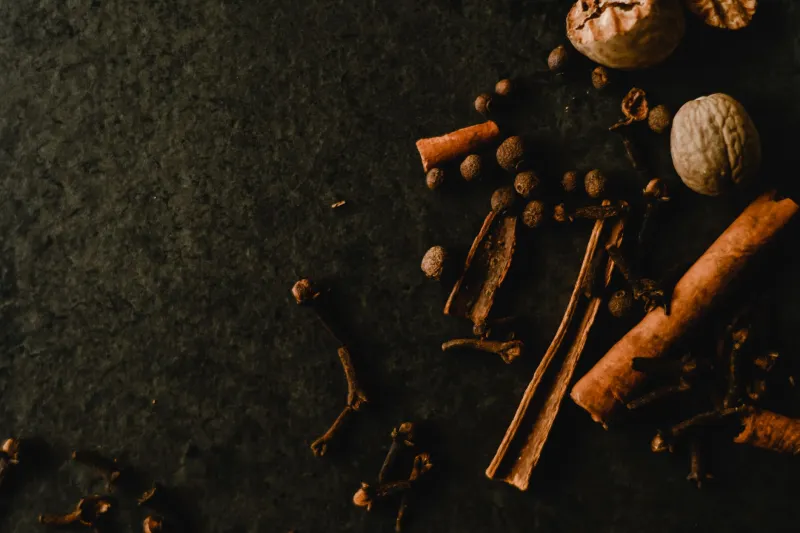
The Caribbean spice pantry is one of the most underappreciated in the world. Allspice — which despite its name is a single berry native to Jamaica — pimento, nutmeg, bay leaf, and Scotch bonnet pepper form the backbone of an entire cooking tradition that's as spice-forward as any masala. And for Jamaican American, Trinidadian American, and broader Caribbean diaspora communities, it was only a matter of time before those flavors made their way into tea.
In cities like New York, Atlanta, and Miami — where Caribbean American communities are large and culturally vibrant — a new style of chai is emerging that swaps or supplements the standard cinnamon-cardamom base with allspice berries, whole nutmeg, and occasionally a whisper of Scotch bonnet for heat. The effect is immediately recognizable to anyone familiar with the spice profile of Jamaican jerk or Trinidadian curry: warm, round, and deeply aromatic, with a sweetness that feels different from the sweetness of cinnamon.
Brooklynn St. Clair, a home brewer and recipe developer based in the Bronx whose family is from Trinidad, describes her chai as "a hug from my grandmother's kitchen." Her signature blend uses allspice as the dominant warming spice, keeps the black pepper high, and finishes with a bay leaf steep that adds an almost herbal depth. She's been sharing variations of it on social media for two years and says the response from both Caribbean American followers and non-Caribbean chai drinkers has been overwhelming.
"People keep telling me it tastes familiar but they can't place it," she says. "That's exactly what I want. It's chai, but it's also home."
East African Tea Culture: Spice, Milk, and a Different Kind of Ritual
East Africa has its own deep tea culture that doesn't get nearly enough attention in American conversations about chai. Kenya is one of the world's largest tea producers, and chai ya maziwa — Kenyan milky spiced tea — is as central to daily life there as masala chai is in India. Ethiopian and Eritrean tea traditions bring their own spice profiles to the table, often featuring fenugreek, coriander, and the earthy warmth of berbere-adjacent spice combinations.
In US cities with significant East African immigrant populations — Minneapolis, Seattle, Washington D.C., Columbus — these traditions are finding their way into chai culture in interesting ways. Ethiopian American brewers have introduced fenugreek as a chai spice, which adds a slightly bitter, maple-like quality that's genuinely addictive once you've tasted it. Kenyan tea bases — often stronger and more robust than the Assam commonly used in masala chai — are showing up in small-batch American blends that want more body without more milk.
Turmeric, long used in East African cooking and healing traditions, is another crossover ingredient appearing in American chai blends that draw from this heritage. While golden milk has made turmeric a mainstream wellness ingredient in the US, East African American blenders are using it differently — not as the star, but as a background note that adds color, mild bitterness, and anti-inflammatory properties to spiced tea blends.
What This Means for American Chai
The broader story here is one of chai expanding to become something genuinely plural. The masala tradition brought by South Asian immigrants is still very much the foundation — and it's a rich, complex one. But as diaspora communities from other parts of the world put their own spice cultures into conversation with that tradition, the American chai landscape is becoming something that no single origin story can contain.
For home brewers, this is genuinely exciting news. It means your spice cabinet has permission to grow. Allspice berries, green cardamom pods, fenugreek seeds, dried rose petals — these aren't exotic additions. They're invitations to make chai that's actually yours.
The best American chai isn't a copy of something made somewhere else. It's the cup you build from everything you carry.