Slow Down and Steep: Building a Daily Chai Ritual That Actually Sticks

The Cup That Changes Everything (If You Let It)
Most of us start our mornings on autopilot. Phone alarm, scroll social media, shove a pod into the coffee maker, and sprint out the door. But a growing number of chai enthusiasts across the US are doing something quietly radical: they're slowing down. On purpose.
The idea of a chai ceremony might sound like something reserved for a specialty café in Portland or a grandmother's kitchen in Mumbai. But the truth is, the conditions for a meaningful, meditative chai practice are already sitting in your pantry. It just takes a little intention — and maybe a dedicated corner of your kitchen — to unlock it.
Why Ritual Actually Works on Your Brain
Before we get into cardamom and copper pots, let's talk about why ritual matters in the first place. Psychologists have long recognized that repetitive, intentional behaviors help reduce anxiety, increase focus, and create a felt sense of control. When you do the same sequence of actions in the same order every day, your nervous system starts to associate that sequence with safety and calm.
Chai preparation, with its natural layering of steps — measuring spices, crushing cardamom, watching milk foam at the edges of the pan — is practically designed for this. It engages your senses one at a time. You smell before you taste. You listen to the simmer before you see the color deepen. It's sensory sequencing, and it pulls you out of your head and into the present moment in a way that pressing a button on a machine simply can't replicate.
"I started making chai from scratch during a particularly rough stretch at work," says Maya T., a graphic designer in Austin, Texas. "It became the one part of my morning I actually looked forward to. Twenty minutes where I wasn't thinking about deadlines. Just spices and steam."
Setting Up Your Chai Space
One of the most underrated moves you can make is designating a specific spot in your kitchen for chai prep. It doesn't have to be elaborate — a small tray on the counter works perfectly. The point is to create a visual anchor, a place your eyes land on and your body knows what to do.
Here's what a solid home chai station might include:
- A small mortar and pestle for crushing whole spices fresh each time. The act of grinding is meditative in itself.
- A dedicated saucepan — ideally one you only use for chai. Seasoned pans build flavor memory over time.
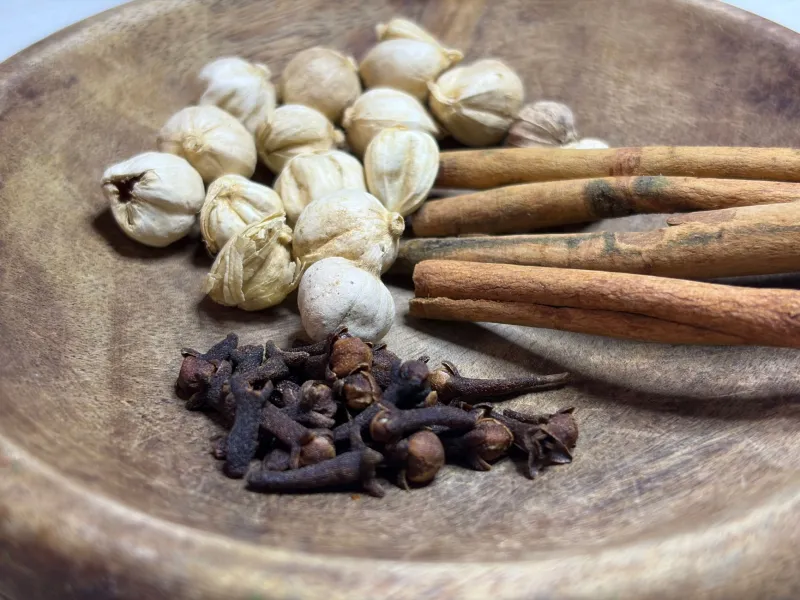
- A spice caddy or small tins holding your go-to masala components: green cardamom, whole cloves, black pepper, cinnamon sticks, dried ginger.
- Your preferred loose-leaf tea — a strong Assam or Darjeeling base holds up beautifully to milk and spice.
- A strainer and a favorite mug — the vessel matters more than you think. Drinking from something you love adds to the ritual.
Keeping everything in one spot eliminates decision fatigue and reinforces the habit loop. When you see the tray, you know what's coming next.
The Ceremony Itself: No Strict Rules, Just Presence
Here's the thing about building a chai ceremony at home — it doesn't need to look like anything specific. The whole point is that you make it yours. That said, a loose framework helps, especially when you're starting out.
Try this as a starting point:
- Begin before you touch anything. Take three slow breaths. Put your phone face-down or in another room. This signals to your brain that what follows is different from the rest of the day.
- Crush your spices by hand. Skip the pre-ground stuff, at least for your ritual cup. The smell released from freshly crushed cardamom is genuinely arresting — it's hard to stay distracted when that hits your nose.
- Watch the pot. Seriously. Don't walk away. Stand there and watch the milk and tea come together. Notice the color shift, the foam forming at the edges, the way the spices move in the liquid.
- Pour slowly and deliberately. Strain your chai into your mug with the same care you'd give to anything you're proud of.
- Sit down before you drink. This is the step most people skip, and it's arguably the most important one. Don't drink on the go. Sit. Even for five minutes.
"The sitting part took me the longest to commit to," admits Jordan K., a nurse in Chicago who started a chai practice after a particularly demanding year on the floor. "But once I started doing it, I realized that was the whole point. The chai was just the excuse to stop moving."
Drawing from Chai's Cultural Roots
It's worth pausing to acknowledge where all of this comes from. Chai — spiced, milky tea — has been a cornerstone of daily life across South Asia for generations. In many Indian households, making and sharing chai is a form of hospitality, connection, and care. It's not just a drink; it's a gesture.
When we talk about building a chai ceremony at home in a Western context, we're borrowing from a rich cultural tradition. Doing so thoughtfully means learning about that tradition, not just aestheticizing it. Explore the regional variations — Kashmiri noon chai, Mumbai cutting chai, Kolkata's roadside brew — and let that knowledge deepen your appreciation for what's in your cup.
Some of the best chai enthusiasts we've spoken to keep a small notebook near their chai station where they jot down what they tried, what worked, what didn't. It becomes a kind of flavor journal — part recipe log, part meditation diary.
What Regulars Say After Six Months of Practice
We checked back in with a handful of people who committed to a daily home chai ritual for at least six months. The results weren't dramatic in a headline-grabbing way — nobody reported life-changing revelations. But the consistent theme was quieter and, frankly, more useful: a reliable sense of groundedness that carried through the rest of the day.
"It's not that making chai fixes anything," says Priya M., a teacher in Seattle. "It's more like it reminds me that I'm a person, not just a schedule. That sounds small, but it's actually huge."
That's the real magic of a chai ritual done right. It's not about the perfect recipe or the most expensive spices. It's about choosing, every single day, to do one thing slowly and on purpose.
Your local café does a beautiful job. But there's something it genuinely cannot give you — the particular satisfaction of making your own cup, in your own space, exactly the way you like it, with nowhere else to be for the next twenty minutes.
Steep accordingly.