Why Your 3 PM Cup Hits Different: The Real Science of Chai and Your Body Clock
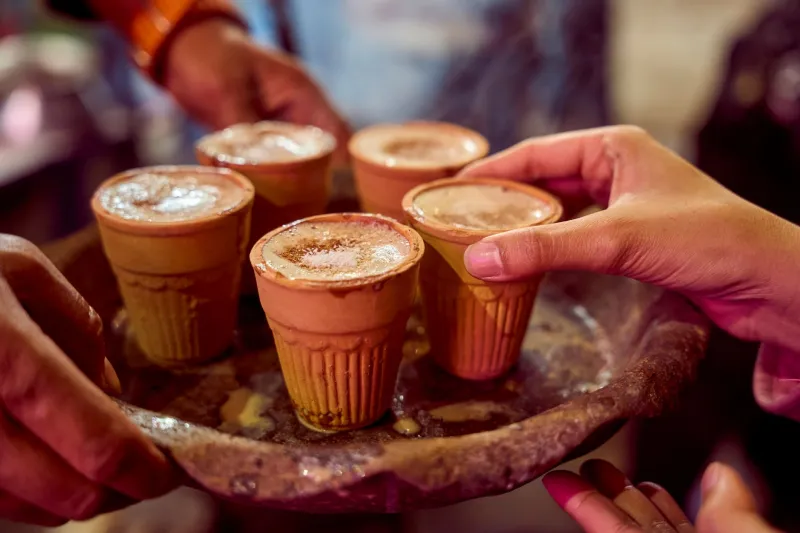
You've probably noticed it without ever putting words to it. The chai you brew at dawn — the one you make half-asleep, leaning against the counter — gets the job done. It's warm, it's spiced, it wakes you up. But that cup you steep somewhere around mid-afternoon? That one is something else entirely. The aroma seems sharper. The cardamom blooms. The sweetness lands in exactly the right place. You didn't change the recipe. So what changed?
Short answer: you did. And science has a lot to say about it.
Your Taste Buds Have a Schedule (And Morning Isn't Their Peak)
Human taste perception is not a fixed, constant experience. It fluctuates throughout the day in ways that most of us never consciously register. Research in chronobiology — the study of how biological processes align with time — has shown that sensory sensitivity, including our ability to detect bitterness, sweetness, and spice, shifts in meaningful ways depending on where we are in our circadian cycle.
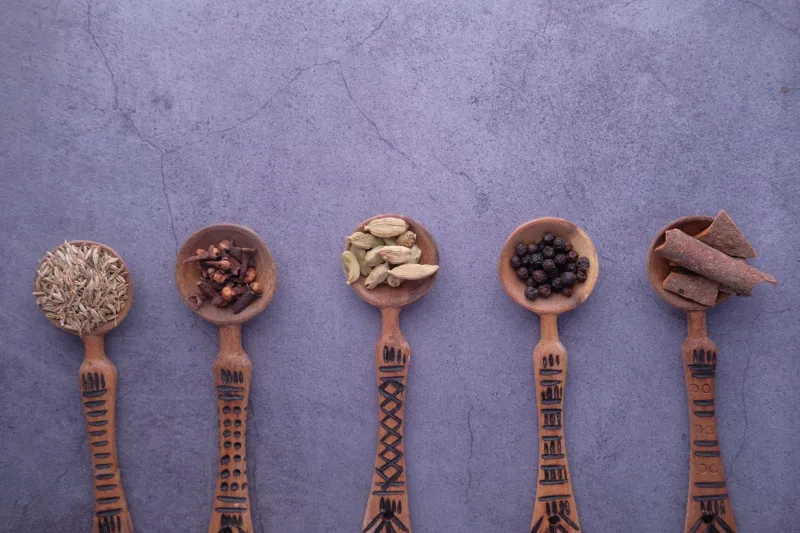
In the early morning hours, the body is still ramping up. Cortisol levels are high, the digestive system is just getting going, and the mucous membranes in the mouth and nose — the very tissues responsible for taste and smell — haven't fully "warmed up" to their peak sensitivity. What this means practically is that the complex spice profile of a well-made masala chai — the interplay between cardamom, ginger heat, clove depth, and cinnamon sweetness — can feel muted or one-dimensional when you drink it at 7 AM.
By mid-afternoon, somewhere in that golden window between 2 and 4 PM, things shift. Cortisol has mellowed. Body temperature hits its daily peak. And olfactory sensitivity — your sense of smell, which accounts for the vast majority of what we perceive as "flavor" — is operating at full capacity. The same cup of chai you brewed this morning with the same spices tastes more layered, more aromatic, and more satisfying simply because your sensory hardware is finally running at its best.
Temperature Perception and the Chai Sweet Spot
Here's another wrinkle that doesn't get talked about enough: how we perceive temperature in food and drink is also circadian. Our core body temperature naturally rises through the morning and into the early afternoon, peaking around 4 to 6 PM before beginning its gradual descent toward sleep.
This matters for chai in a specific, almost poetic way. When your body temperature is at or near its daily peak, a hot beverage registers differently on your palate than it does when you're still cool from sleep. The contrast is smaller, which means the drink doesn't overwhelm — instead, the warmth feels enveloping rather than scalding. The spices, which release their volatile aromatic compounds at specific heat levels, land on taste receptors that are primed and ready. You're essentially meeting the chai halfway.
There's also the question of how heat affects the perception of sweetness. Studies in sensory science have found that warmer temperatures can amplify sweet perception in beverages. Since a properly made chai — whether sweetened with sugar, jaggery, or a touch of honey — relies on that sweetness to balance the bite of black pepper and ginger, drinking it when your sweet receptors are most responsive creates a more harmonious experience.
Spice Absorption and the Role of a Full Stomach
Morning chai is often consumed on an empty or near-empty stomach, which sounds like it should make flavor more intense. But it's a bit more complicated than that. The capsaicin-adjacent compounds in ginger and black pepper — the ones responsible for that warming, slightly spicy sensation — can actually feel harsh or irritating when the stomach lining has nothing to buffer them. This is why some people find morning chai sits uncomfortably, or why the spice feels aggressive rather than pleasant.
By the afternoon, you've had a meal or two. The digestive system is in a different gear. The stomach lining is more buffered, and the body is better equipped to process and enjoy those bioactive compounds in chai spices. Gingerols, cinnamaldehyde, eugenol from cloves — these aren't just flavor molecules. They're biologically active, and your body's readiness to receive them shifts throughout the day.
"There's a reason chai culture across South Asia has always had a strong afternoon tradition," says Priya Nambiar, a food anthropologist and chai enthusiast based in Chicago. "The afternoon chai break isn't just a social ritual — it maps onto something real about how the body and the senses work. People figured this out empirically long before anyone had the language of food science to explain it."
The Psychology of the Pause
Science aside, there's something to be said for context. Morning chai is functional. You're making it because you have to start the day, because the kids need to get to school, because the inbox is already filling up. The ritual is compressed, transactional.
Afternoon chai is different in character. It's a choice. You're stepping away from whatever the day has thrown at you. You're steeping something intentionally. That psychological shift — from obligation to indulgence — genuinely affects flavor perception. Research in food psychology consistently shows that our expectations and emotional state going into a meal or drink significantly shape how we experience it. A chai sipped in a moment of deliberate pause will taste better than the same chai chugged between emails. The brain is part of the equation.
Making the Most of Your Golden Hour
So what does all this mean practically? A few things worth trying:
Slow the steep. If you're making afternoon chai, give yourself permission to be deliberate. Let the spices simmer a full three to four minutes. Your taste buds can handle the complexity right now — lean into it.
Go lighter on sweetener. Because your sweet perception is naturally heightened in the afternoon, you may find you need less sugar or honey to achieve the same balance you'd want in a morning cup.
Experiment with spice ratios. Cardamom and cinnamon tend to sing in afternoon chai in a way they don't always at dawn. Try bumping those up slightly and dialing back the black pepper, which can feel more aggressive when your body is fully alert.
Ditch the travel mug. Afternoon chai deserves a proper cup. The ritual of holding something warm, of taking an actual pause, is part of what makes the experience land. Give it that respect.
Your morning chai will always have its place. But now you know — the afternoon cup isn't better just because you're finally awake. It's better because everything, from your nose to your gut to your state of mind, is finally ready for it.